
Resource Archive - VPP Acceleration Initiative
SEARCH RESOURCES
You can also search by author name.
RESOURCE TYPES
RESOURCE TOPICS
RESOURCE PROJECTS
RESOURCE YEARS
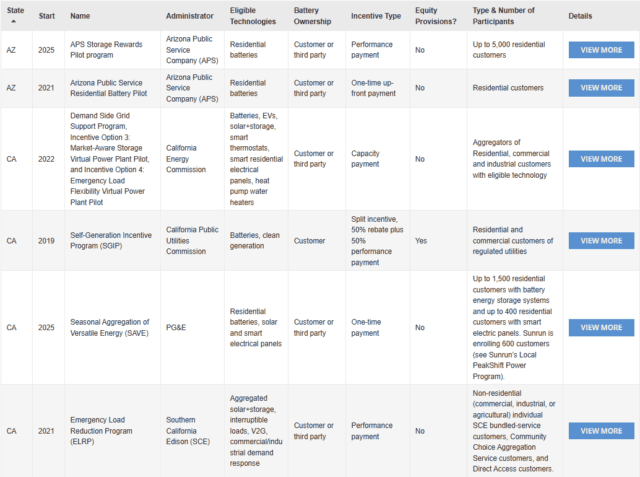
Over the past decade, the number of Virtual Power Plants (VPPs) in the U.S. has grown from a handful of small pilots to dozens of programs, some with thousands of participating ratepayers. Battery owners (or leasers) in approximately half the states in the country now have the opportunity to enroll in a VPP, to provide grid services and be compensated in return. This table summarizes the VPP programs that include battery storage, and provides links to relevant program pages and documents.
This issue brief, released by Clean Energy Group and CESA, outlines best practices and lessons learned for state policymakers and regulators engaged in developing energy storage peak demand reduction programs. The brief explores key elements of program design, such as incentive mechanisms and dispatch methods, as well as considerations for incentivizing load reduction versus power export, and peak demand reduction versus emission reduction.
This issue brief provides recommendations and guidance on incentive rate-setting for states seeking to develop distributed (behind-the-meter) energy storage incentive programs. It is intended to help states decide how to structure incentive programs and how to set incentive rates.
This report is intended as a guide for state energy agencies preparing to conduct cost-effectiveness evaluation for battery storage. It presents a benefit-cost analysis framework for battery storage and attempts to address many of the uncertainties state energy agencies may encounter.
Comments on DC Virtual Power Plant Regulatory Roadmap Draft
CESA submitted comments on draft recommendations for a VPP regulatory roadmap by Kathan Energy Consulting for the DC Department of Energy and Environment.