
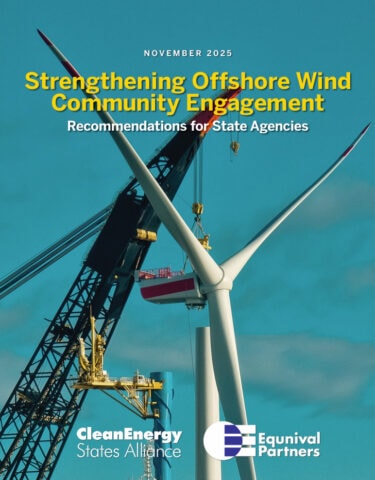
Strengthening Offshore Wind Community Engagement: Recommendations for State Agencies
Clean Energy States Alliance | Equnival Partners
After several years of collaborative work with states and community-based organizations, the Clean Energy States Alliance (CESA) and its partners have published “Strengthening Offshore Wind Community Engagement: Recommendations for State Agencies.”
This report, coauthored by Equnival Partners and informed by a CESA-led working group of state agencies and community-based organizations, offers concrete steps that state agencies can take to meaningfully engage with communities as states plan for offshore wind projects. These recommendations provide a roadmap for communities to shape how they benefit from investments in offshore wind power.
Offshore wind offers an enormous opportunity to build renewable, reliable, and domestic electricity, but states and developers must address its effects on communities hosting, adjacent to, or impacted by its infrastructure, especially communities already burdened by climate change and fossil fuel emissions.
While the current delay in offshore wind development presents a significant challenge to decarbonizing power systems and meeting growing electricity demand, it also creates an opportunity for state agencies to build meaningful relationships with local communities. Strong partnerships would ensure that future offshore wind development does not replicate the climate, health, and economic harms caused by fossil fuels, and prevent conflicts with local communities that can delay much-needed deployment of clean energy.
The report recommends that state agencies:
- Share Information: Work with trusted partners to provide accurate information to impacted and adjacent communities about state and federal planning, permitting, and decision-making processes for offshore wind development.
- Increase Access: Create or provide access to forums where impacted and adjacent communities can share input and influence decisions that affect them during the project planning, development, operation, and decommissioning processes.
- Build and Sustain Community Capacity: Secure funding and resources for impacted and adjacent communities and community organizations to participate meaningfully in offshore wind planning, permitting, and decision-making processes at the local, state, and federal level.
- Develop Frameworks and Standards for Investment in Communities: Work with impacted and adjacent communities to develop models, standards, and frameworks to realize long-term investments in communities from offshore wind developers and suppliers.
For a complete picture of offshore wind projects and policies in the US, visit the Offshore Wind Power Hub website: https://offshorewindpowerhub.org. This website includes an interactive map outlining offshore wind policies, projects, and lease areas across the country. The map has been updated to reflect the impacts of recent federal activity.
Associated Project(s):
Resource Details:
Date: November 12, 2025
Type: Report
Topic(s): Offshore Wind