
Resource Archive - Energy Storage
SEARCH RESOURCES
You can also search by author name.
RESOURCE TYPES
RESOURCE TOPICS
RESOURCE PROJECTS
RESOURCE YEARS
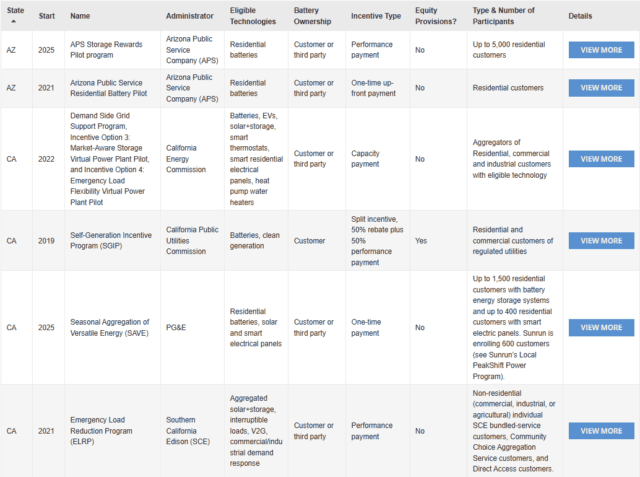
Over the past decade, the number of Virtual Power Plants (VPPs) in the U.S. has grown from a handful of small pilots to dozens of programs, some with thousands of participating ratepayers. Battery owners (or leasers) in approximately half the states in the country now have the opportunity to enroll in a VPP, to provide grid services and be compensated in return. This table summarizes the VPP programs that include battery storage, and provides links to relevant program pages and documents.
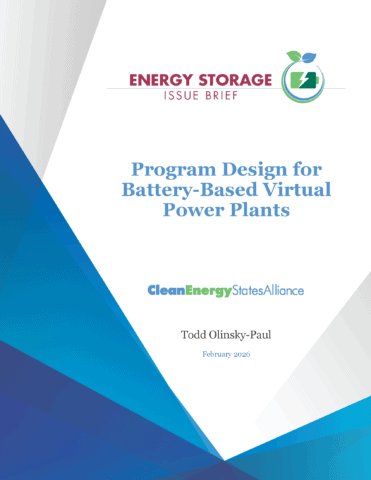
This issue brief by CESA covers BVPP program design. The brief surveys and summarizes the characteristics of existing BVPPs, discusses design elements such as battery ownership and compensation mechanisms, and provides a high-level overview of the current state of BVPPs in the United States
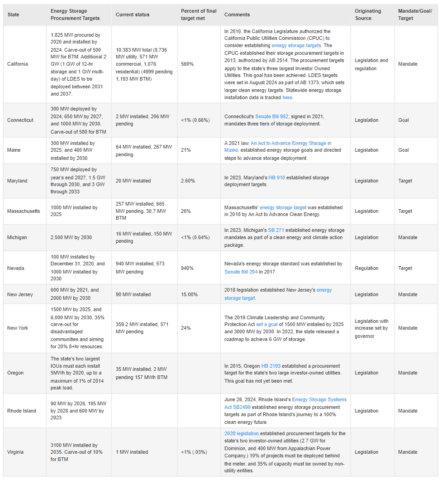
This table includes all existing state energy storage procurement mandates, targets, and goals.
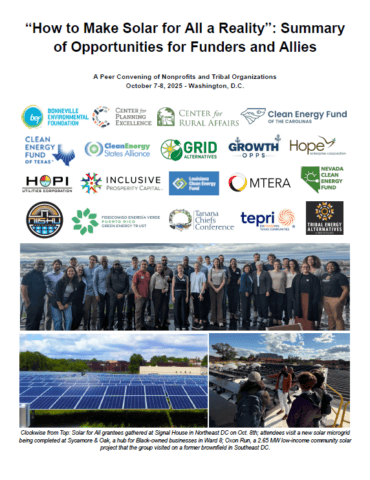
Broadening access remains critical to achieve affordability, reliability, and decarbonization goals with solar and solar+storage. A group of nonprofit and Tribal Solar for All grantees produced a summary of the funding, policy, and communication strategies that potential funders and allies seeking to continue this work can prioritize. Among others, strategies include supporting virtual power plant…
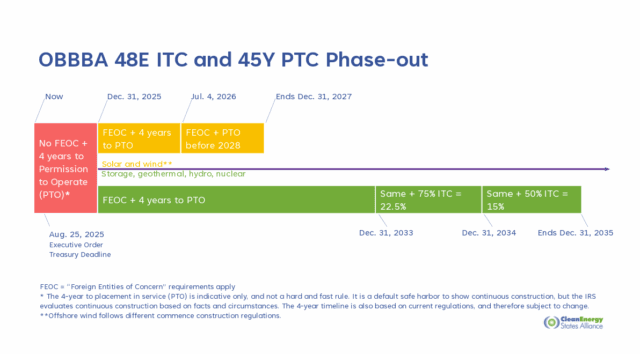
This diagram displays primary dates for commencing construction, foreign entities of concern, and placement in service by technology in one print out diagram to use as a quick reference.
This issue brief, released by Clean Energy Group and CESA, outlines best practices and lessons learned for state policymakers and regulators engaged in developing energy storage peak demand reduction programs. The brief explores key elements of program design, such as incentive mechanisms and dispatch methods, as well as considerations for incentivizing load reduction versus power export, and peak demand reduction versus emission reduction.
This report from CESA and Sandia National Labs compiles the results of independent research, providing a summary of emerging affordability and accessibility approaches in leading state energy storage programs. It is intended as a reference material that can be used in state energy storage policymaking across diverse geographical and regulatory jurisdictions.
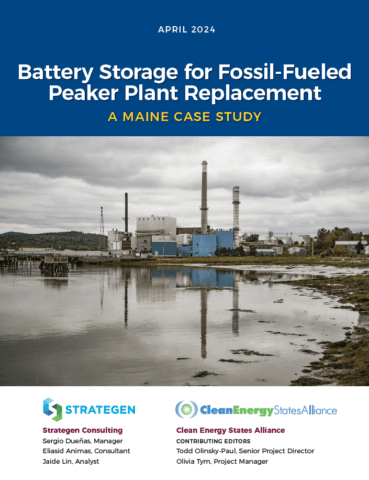
This analysis demonstrates that battery storage can cost effectively replace aging fossil-fueled peaker power plants in New England.
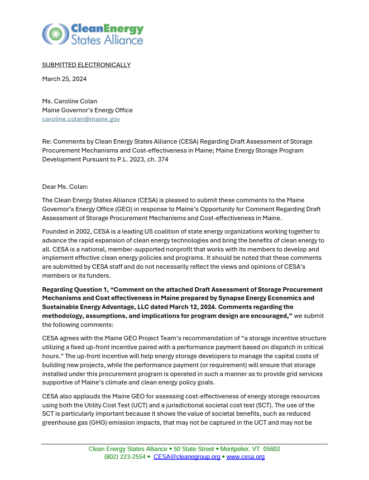
Comments Regarding Maine’s Draft Assessment of Storage Procurement Mechanisms and Cost-Effectiveness
The Clean Energy States Alliance submitted comments to the Maine Governor’s Energy Office (GEO) in response to their Opportunity for Comment Regarding Draft Assessment of Storage Procurement Mechanisms and Cost-effectiveness.
Comments on Maine DOER Draft Request for Proposals for Energy Storage Projects
CESA submitted comments to the Maine Department of Energy Resources regarding its draft request for proposals (RFP) for energy storage projects. CESA applauds the draft RFP, but encourages DOER to include fossil fuel peaker power plant replacement among the potential benefits of energy storage to be included in the RFP and to be considered when evaluating proposals.