
Resource Archive - Energy Storage
SEARCH RESOURCES
You can also search by author name.
RESOURCE TYPES
RESOURCE TOPICS
RESOURCE PROJECTS
RESOURCE YEARS
Winter electric peaking capacity services are currently undervalued in the Massachusetts programs that provide battery customers with performance payments to supply power back to the grid at times of high demand.
This report assesses the design and performance of the Massachusetts ConnectedSolutions program, as it has been administered in the first three-year program cycle, and compares it with related programs in other states across the country.
This report explores energy storage policy best practices and lessons learned from the New England states. It aims to inform state policymakers and regulators seeking to expand energy storage markets.
This report aims to inform state policymakers about the structure and benefits of the ConnectedSolution battery storage program model. It summarizes barriers to scaling up distributed battery storage, explains how the ConnectedSolutions program was developed in the Northeast, and discusses why the program has been successful.
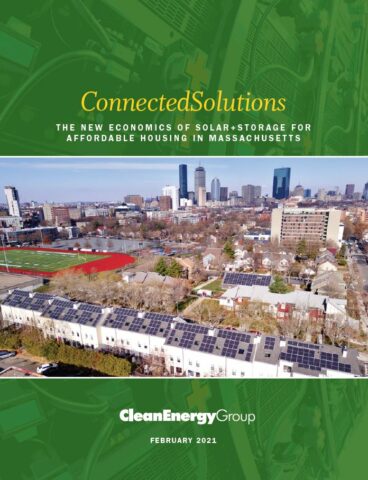
An analysis of multifamily affordable housing properties in Massachusetts finds that participation in the state’s new battery storage incentive program, called ConnectedSolutions, significantly improves the financial viability of solar+storage at affordable housing developments.

As part of CESA’s Scaling Up Solar for Under-Resourced Communities project, Clean Energy Group conducted a survey of affordable housing owners and developers, technical services providers, and other stakeholders to assess existing market barriers. A new report summarizes the results of this survey and suggests actions to bring the benefits of solar+storage to the people who need it most.

This report presents case studies of the six recipients of the 2020 State Leadership in Clean Energy Awards.

This Best Practice Guide covers eight key aspect areas of an energy storage project proposal. This Guide documents the industry expertise of leading firms, covering the different project components to help reduce the internal cost of project development and financing for both project developers and investors.
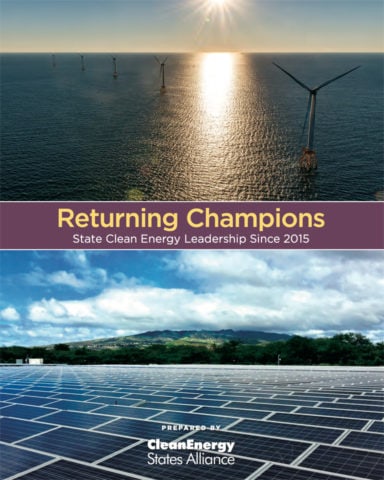
Returning Champions: State Clean Energy Leadership Since 2015, a new report from the Clean Energy States Alliance (CESA), highlights the essential role that states are playing to develop and implement effective policies and programs. The report describes the range of strategies and initiatives that states are using to grow clean energy markets, and it provides readers with a concise overview of clean energy trends at the state level.
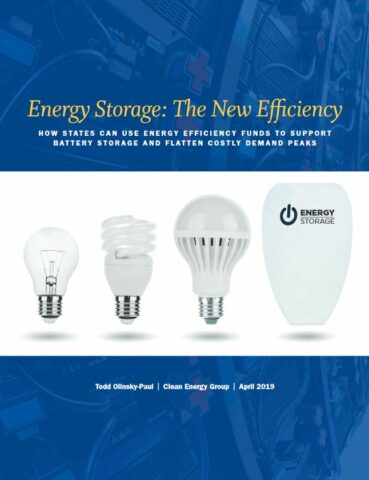
This report explains the steps Massachusetts took to become the first state to integrate energy storage technologies into its energy efficiency plan, including actions to 1) expand the goals and definition of energy efficiency to include peak demand reduction, and 2) show that customer-sited battery storage can pass the required cost-effectiveness test.