


Expanding Solar Opportunity - Blog
“Solar for All” Applications Forecast Bipartisan Support for and Monumental Expansion of Low-Income Solar Market
“I have not pulled all-nighters like this since college!” is not something you hear every day from state energy officials. And yet, it reflects the excitement felt across the country in states both red and blue since last summer when the U.S. Environmental Protection Agency (EPA) launched the $7 billion Solar for All competition, a…
Helping States Meet the Solar for All Challenge
The federal Inflation Reduction Act (IRA) has created the best ever opportunity to bring the advantages of solar to low-income households and disadvantaged communities. Up to now, residential and community solar installations have been financed and developed in ways that make it easy for households with above-average incomes to participate and benefit, but often leave…

Expanding Solar+Storage in Oregon
The Oregon Solar+Storage Rebate Program offers rebates to residential customers and low-income service providers who install solar or solar paired with energy storage. Rebates are issued to customers through the Oregon Department of Energy’s (ODOE) approved contractors, who pass the full amount of the rebate on as savings to their customers. Homeowners are eligible for…

Solar for Manufactured Homes: The Next Frontier for Energy Equity
There is a growing movement in the clean energy field to bring the benefits of renewable energy to low- and moderate-income communities. A new report by the Clean Energy States Alliance explores the opportunities and challenges of bringing solar to an often-overlooked market that is ripe with potential: manufactured homes. Manufactured homes, formerly referred to…

Going Solar+Storage in Vermont: CESA’s Janice Ouellette Shares Her Story
My husband Dan and I feel very fortunate to live in the “Green” Mountain State of Vermont. In recent years, programs have emerged that have brought clean, renewable and affordable energy to the residential sector in the form of solar PV plus battery storage. Our path to solar plus storage has been a two-stage process,…

Michigan Solar Communities: Using a Community Solar Model to Expand Solar Access to Low- and Moderate-Income Communities
The Michigan Department of Environment, Great Lakes, and Energy’s (EGLE) Low- to Moderate- Income Access Program uses a community solar model to enable customers to access solar, obtain weatherization services, and save on their electric bills. The program represents a close partnership between two local electric utilities (Cherryland Electric Cooperative and the Village of l’Anse…

Energy Trust of Oregon’s Inclusive Innovation Project: Leveraging Community Expertise to Develop Equitable Solar Programs
Energy Trust of Oregon has a long history of clean energy innovation; it was involved in expanding the first Solarize program in the country in 2009. More recently, Energy Trust’s Inclusive Innovation Project sought to adapt innovative business development models to create effective solar programs that reach under-resourced customers throughout Oregon. Over the past four…

The Mass Solar Loan Program: Bringing Solar Ownership to Low-Income Homeowners
The Mass Solar Loan Program, launched by the Massachusetts Clean Energy Center (MassCEC) and the Massachusetts Department of Energy Resources (DOER) in 2015, combines strategic incentives and partnerships with local banks and credit unions to increase access to solar PV financing, while creating a robust solar lending market. Most recently, its incentives have focused exclusively…
A Small-Scale Solar Project with a Big Impact in LaGrange, Georgia
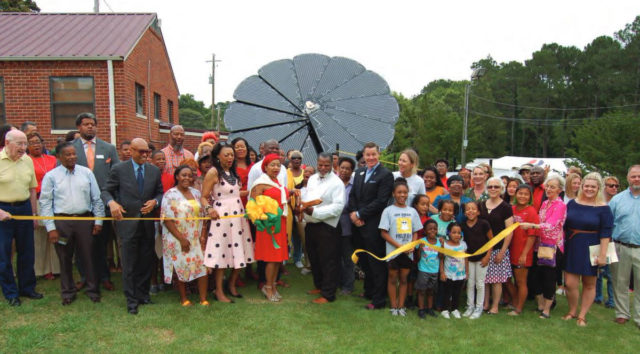
The LaGrange Housing Authority in LaGrange, Georgia has found novel ways to advance renewable initiatives in a state that does not offer the kinds of support, programs, or incentives for renewable energy offered in many other places.

Connecticut Brings Solar to Low- and Moderate-Income Homeowners
Low- and moderate-income (LMI) Americans have had less access to solar than those with higher incomes. Even LMI residents who own their own homes face barriers to installing solar. The Connecticut Green Bank, a quasi-state agency established by the Connecticut General Assembly, analyzed the obstacles and developed tools to bring cost-effective solar, combined with energy efficiency, to the state’s LMI homeowners.